Signs You Need a Foundation Inspection in Oahu Homes
Warning Signs: Foundation issues in Oʻahu homes often start with subtle signs like expanding cracks, sticking doors, uneven floors, or water pooling. Due to the island’s varied soil and climate conditions, early inspection is essential to identify structural movement before it worsens, helping homeowners avoid costly repairs and maintain long-term stability.
Your home in Oʻahu may look solid from the outside. The walls stand straight. The floors seem level. The doors still close. But foundation issues rarely begin with dramatic cracks or visible collapse. They begin quietly.
In Hawaiʻi, especially on Oʻahu, foundation movement is more common than many homeowners realize. Soil conditions vary dramatically between neighborhoods. Ignoring early warning signs often leads to more expensive repairs later. The key is recognizing when a foundation inspection is necessary before minor symptoms turn into structural problems.
Cracks in Interior or Exterior Walls
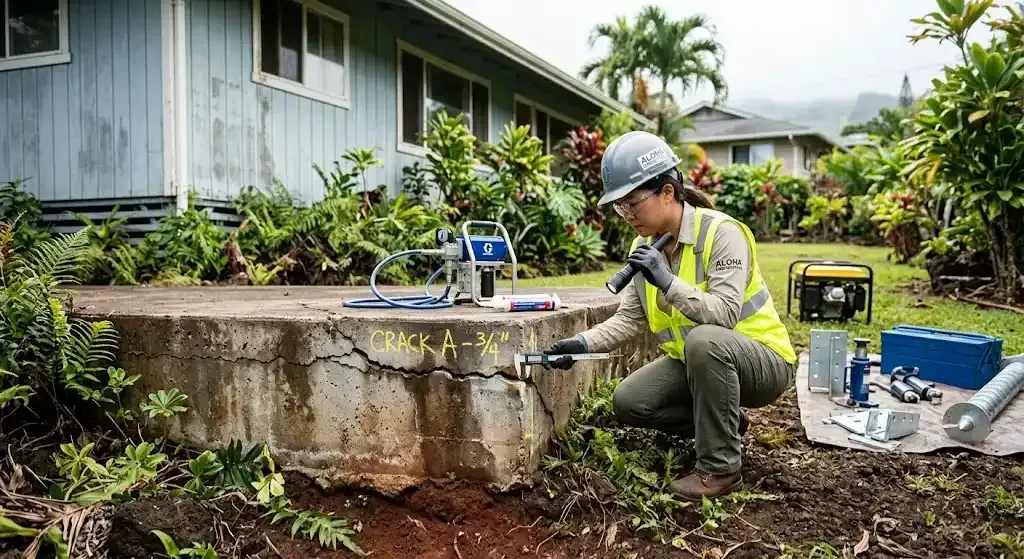
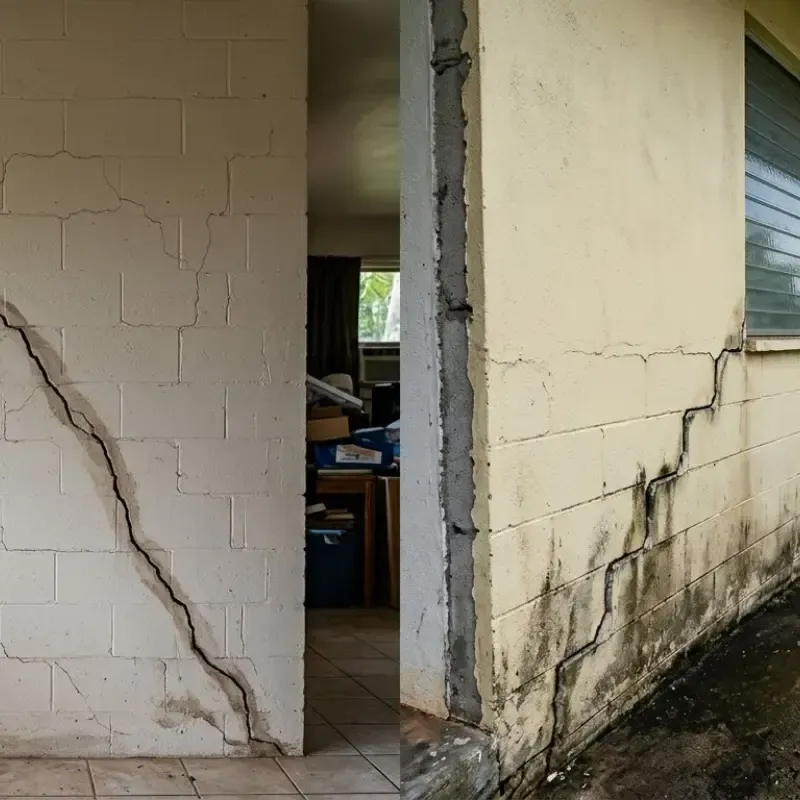
Hairline cracks are normal in many homes, especially as concrete cures and materials settle. However, widening cracks, stair-step cracks in masonry, or diagonal cracks near doors and windows deserve attention.
Diagonal cracking can indicate differential settlement, where one part of the foundation shifts more than another. In Oʻahu, this often occurs in areas with varying soil compaction or where water runoff affects one side of the property.
According to professional foundation services in Oahu, cracks that continue to expand over time should never be dismissed as cosmetic.
Doors and Windows That Suddenly Stick
If doors that once closed smoothly begin sticking or windows become difficult to open, foundation movement may be altering the frame alignment.
Homeowners often assume humidity is the cause. While Hawaiʻi’s humidity does affect wood expansion, sudden or uneven sticking across multiple openings may signal shifting beneath the structure.
Changes in soil moisture content significantly influence soil volume, leading to expansion under wet conditions and contraction during dry periods. Oʻahu’s seasonal rainfall can soften certain soil types, causing minor but significant settlement changes.
When frame distortion becomes noticeable, a professional foundation inspection is a smart next step.
Separation Around Exterior Trim or Garage Doors
Gaps forming between trim and siding or visible separation around garage doors often indicate shifting at the base of the structure.
Also, Missouri University of Science and Technology states that stress concentrations occur at geometric irregularities like openings and sharp corners, where structural stresses become significantly higher than in surrounding areas.
In coastal Oʻahu communities like Hawaiʻi Kai, soil stability combined with salt air exposure can accelerate material fatigue. When separation widens beyond minor cosmetic variation, it warrants professional evaluation.
Water Pooling Near the Foundation
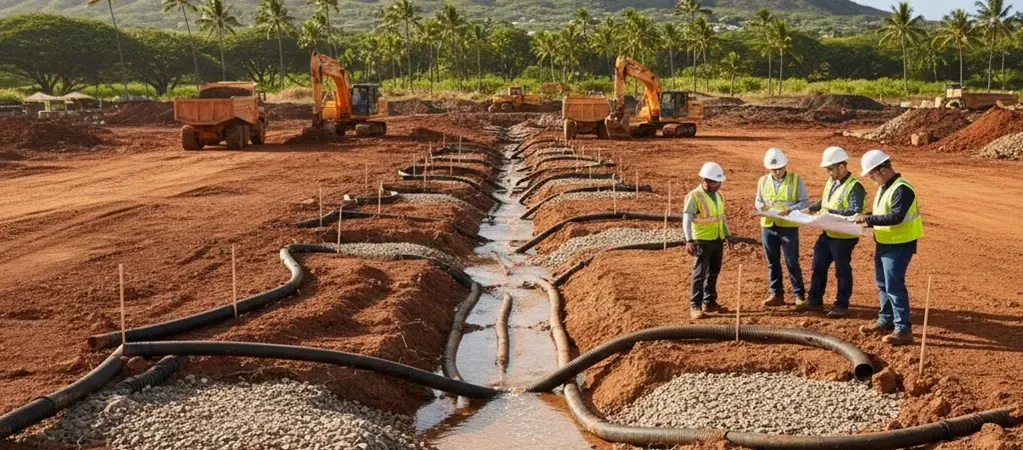
Water management is critical in Hawaiʻi’s climate. Heavy rainfall combined with poor drainage can erode soil beneath the foundation.
According to
our foundation work experts, proper drainage planning and grading are essential in residential construction to keep water flowing away from homes and avoid water-related issues.
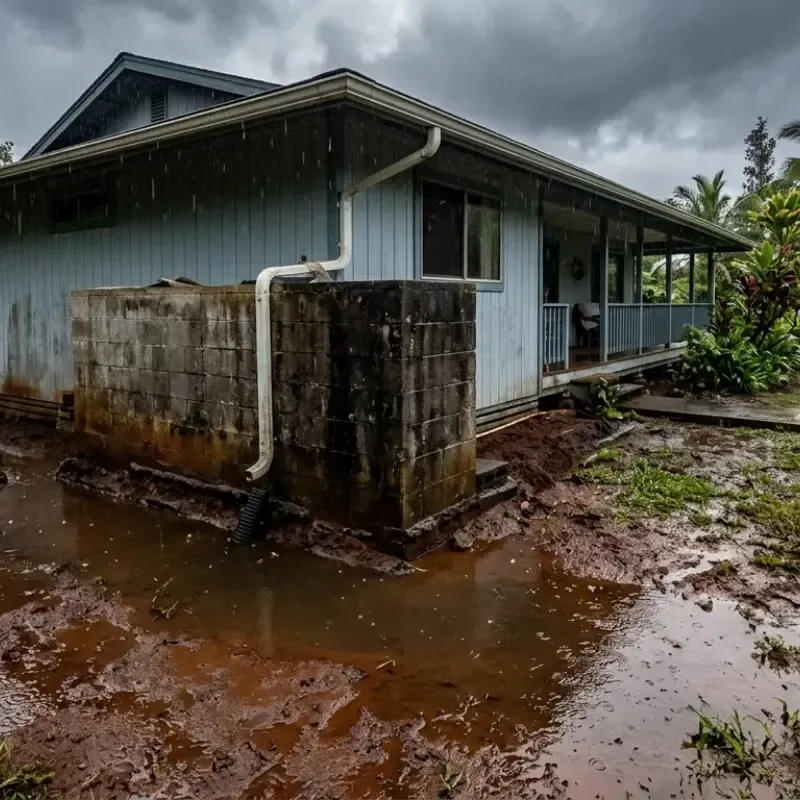
If you notice consistent water pooling near your foundation after storms, an inspection should include both structural and drainage assessment.
Prolonged moisture weakens soil support and increases settlement risk. That’s why proper drainage planning is critical.
Uneven or Sloping Floors
Floors that feel uneven or slightly tilted are often one of the earliest signs of foundation issues. This is particularly relevant in older homes in Honolulu or Pearl City where original compaction methods may not meet current standards.
In our work on masonry and retaining systems, we have seen how minor elevation changes beneath slabs can translate into noticeable slope inside the home. What begins as a subtle imbalance can eventually affect structural load distribution.
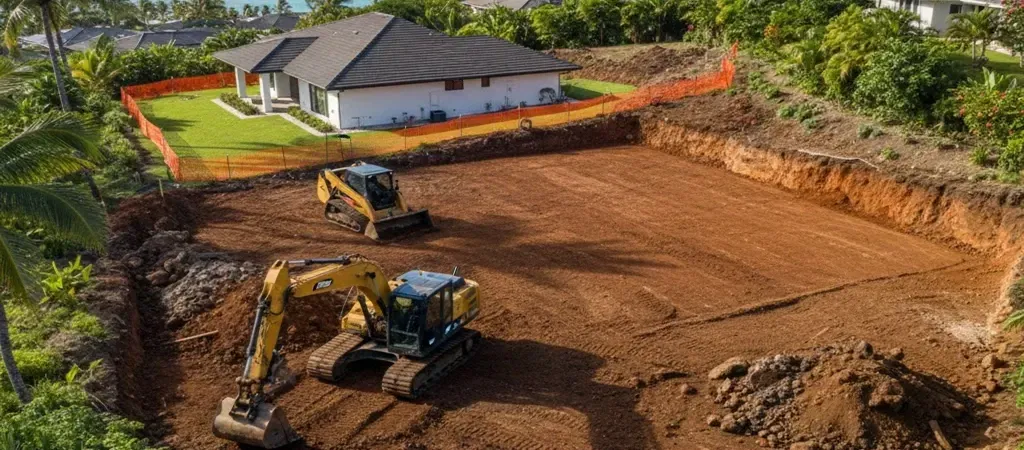
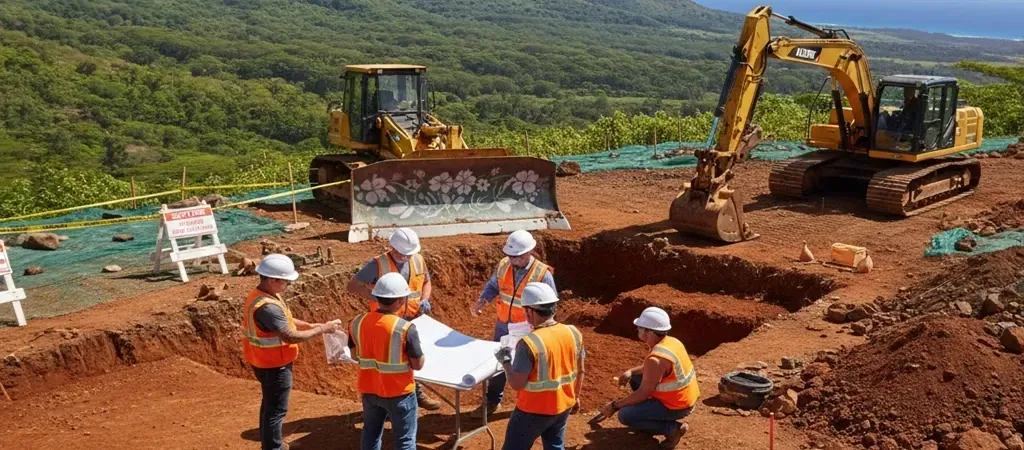
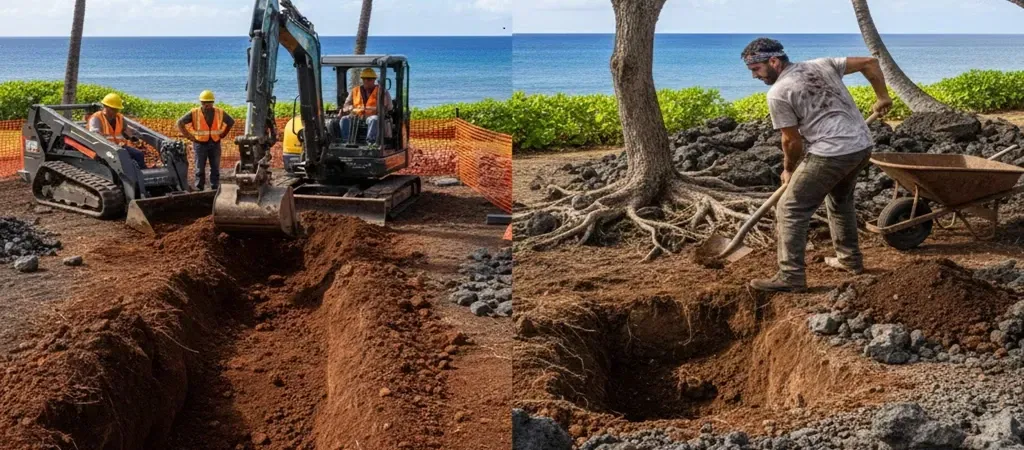
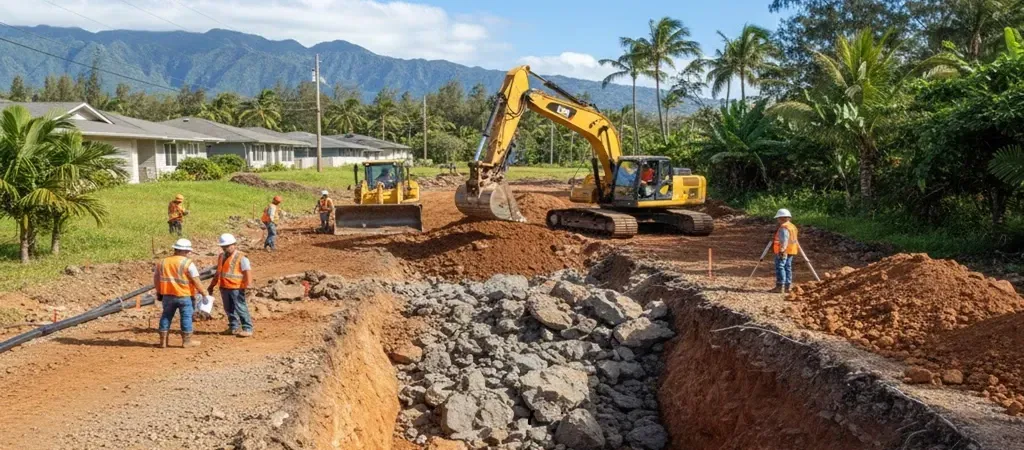
A level check during an inspection can determine whether the slope is within normal tolerance or indicative of movement. Here’s how to know when your Oahu property needs grading, leveling, or full excavation to ensure proper drainage, prevent foundation damage, and prepare your land for construction or landscaping projects.
Cracked or Shifting Driveways and Walkways
Concrete surfaces adjacent to your home can reveal early warning signs before interior damage appears.
When driveways crack unevenly or sections begin lifting, it often indicates soil movement below. Because driveways typically share similar soil conditions with the home foundation, these cracks may reflect deeper structural changes.
We have seen situations where exterior concrete shifts months before interior cracking becomes visible. Observing outdoor surfaces is a proactive way to catch issues early.
Retaining Wall Movement
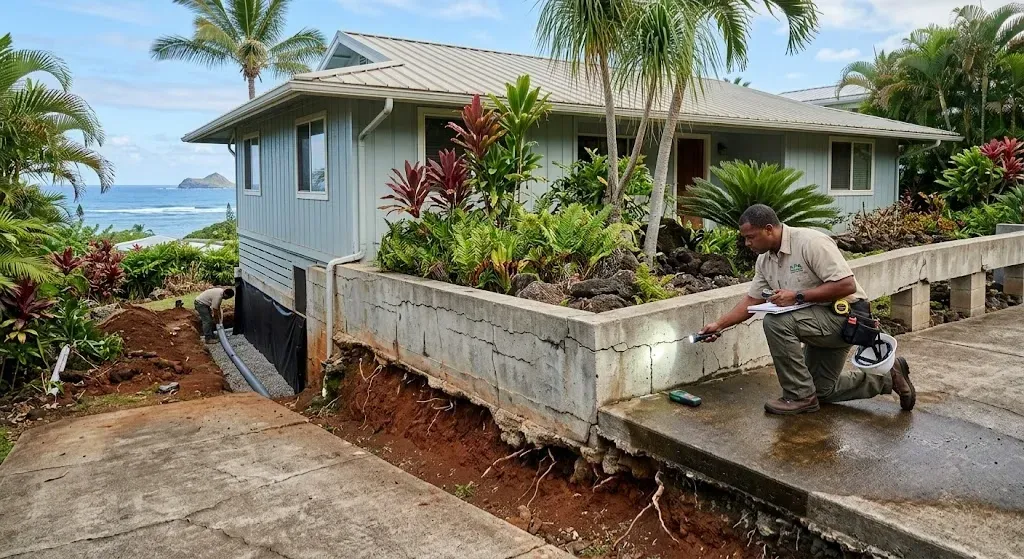
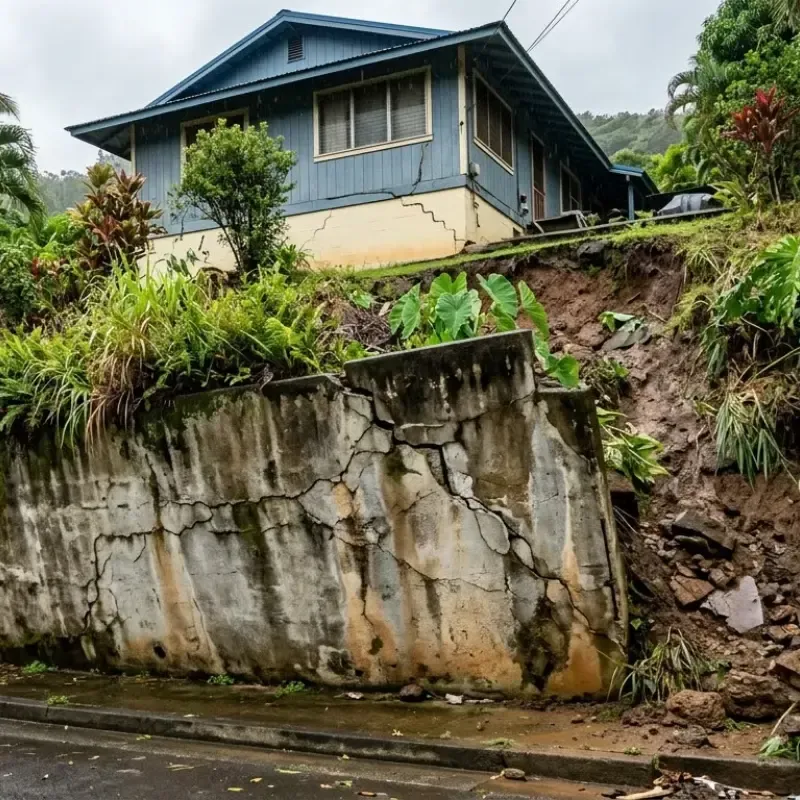
Many Oʻahu homes, especially in hillside neighborhoods like Mānoa or ʻAiea, rely on retaining walls for structural stability. When retaining walls lean, crack, or bulge, the pressure behind them may also be affecting the home’s foundation.
The Hawaiʻi Sea Grant College Program has documented soil instability risks in sloped environments. Retaining wall failure can directly influence foundation settlement.
A foundation inspection should always consider surrounding structural supports, not just the slab or footings.
Common Mistakes Homeowners Make
One of the most common mistakes is assuming small cracks are harmless without monitoring them over time. Another is waiting until visible interior damage appears before scheduling an inspection.
Foundation issues rarely resolve themselves. They either stabilize naturally or continue shifting. Without evaluation, you are guessing.
Another mistake is relying solely on visual surface repairs. Patching drywall without investigating the root cause only hides the symptom.
The Tradeoff Between Inspection and Delay
Some homeowners hesitate to schedule a foundation inspection because they fear expensive repairs. That concern is understandable.
However, delaying evaluation can increase repair costs significantly. Minor settlement correction is far less invasive than structural stabilization after prolonged movement.
Based on experience, early inspections often provide reassurance rather than immediate repair recommendations. Not every crack requires major intervention. The value of inspection lies in clarity.
Why Oʻahu Homes Require Special Attention
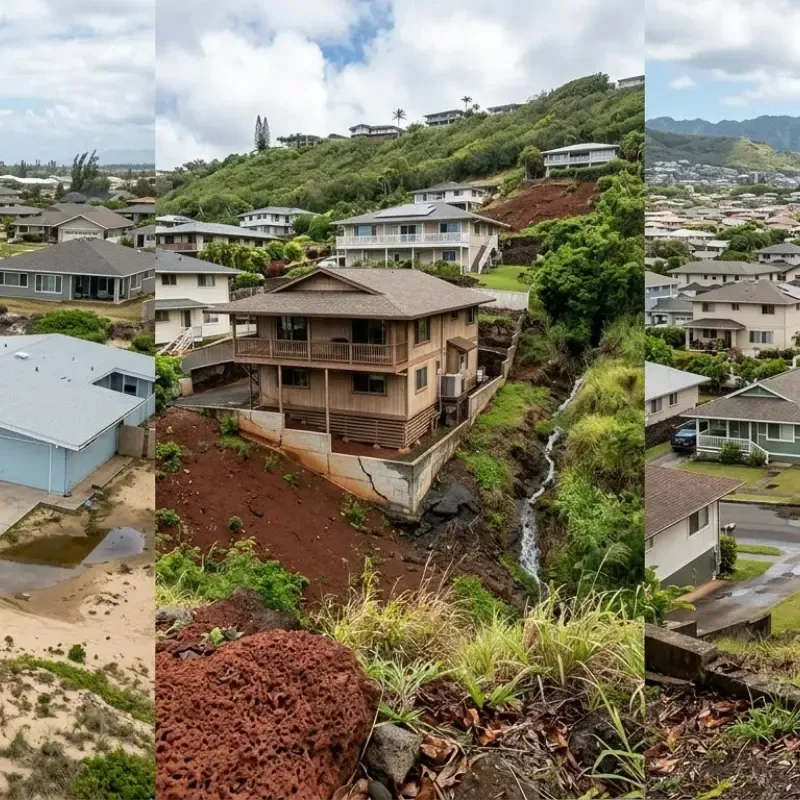
Oʻahu’s combination of volcanic soil, coastal exposure, rainfall variation, and development density creates unique structural conditions. Homes in Ewa Beach sit on different soil profiles than those in Kailua. Drainage patterns vary by neighborhood. Construction age varies widely.
These factors mean foundation health is not a generic issue. It is location-specific.
Final Takeaway
If you notice expanding cracks, sticking doors, uneven floors, water pooling, or retaining wall movement, do not assume the issue is cosmetic.
A foundation inspection in Oʻahu homes provides clarity. It helps determine whether symptoms are normal settlement or early indicators of structural movement.