Key Factors to Consider Before Starting an Excavation Project in Hawaii
Pre-Project Checklist: Successful excavation in Hawaii requires careful planning around soil variability, drainage, slope stability, permits, and environmental impact. Ignoring these factors can lead to structural failure and costly repairs. A well-prepared excavation ensures long-term stability by aligning construction practices with the island’s unique terrain and climate conditions.
Before any digging begins, it is critical to understand what makes excavation in Hawaii uniquely challenging. The islands present a mix of volcanic rock, clay, coral fill, steep slopes, and unpredictable drainage. Ignoring these factors leads to unstable foundations, drainage failures, and long-term structural issues.
Understanding Hawaii’s Soil and Subsurface Conditions
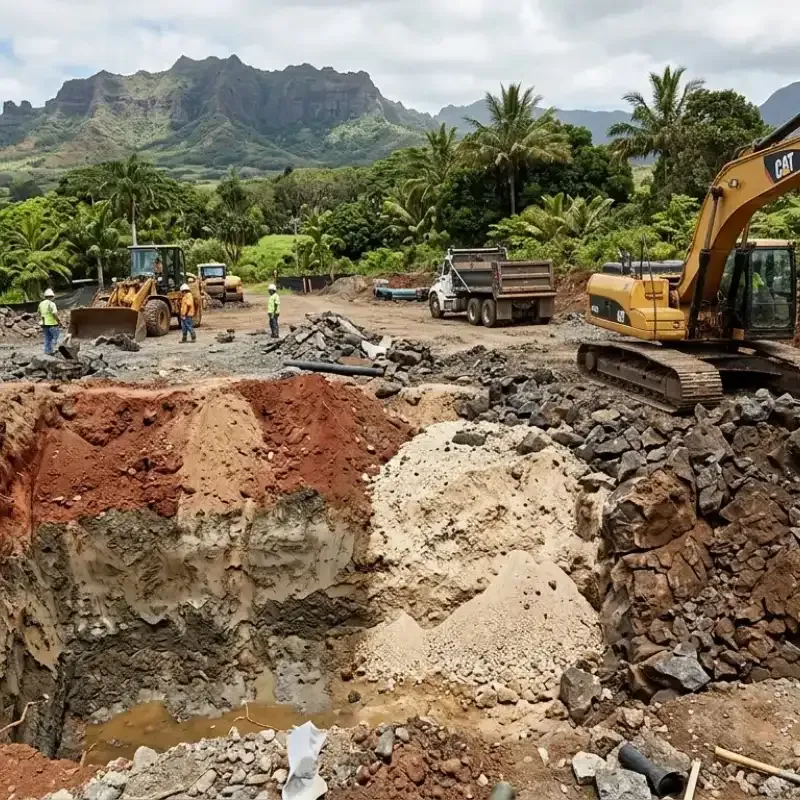
One of the first realities of excavation in Hawaii is soil variability. Even within a single property, conditions can change dramatically. Volcanic rock, dense clay, loose fill, and coral-based soils are all common depending on location and elevation.
Rock-heavy ground slows excavation and requires specialized equipment. Clay soils retain moisture and expand, which affects stability.
Coral fill drains quickly but lacks natural compaction. Assuming uniform soil conditions is one of the most common mistakes made at the planning stage.
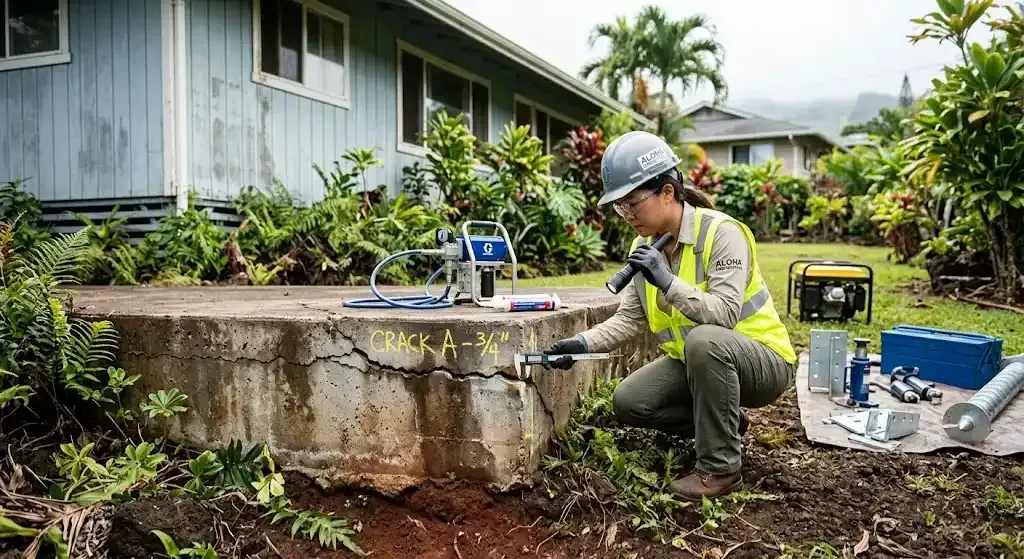
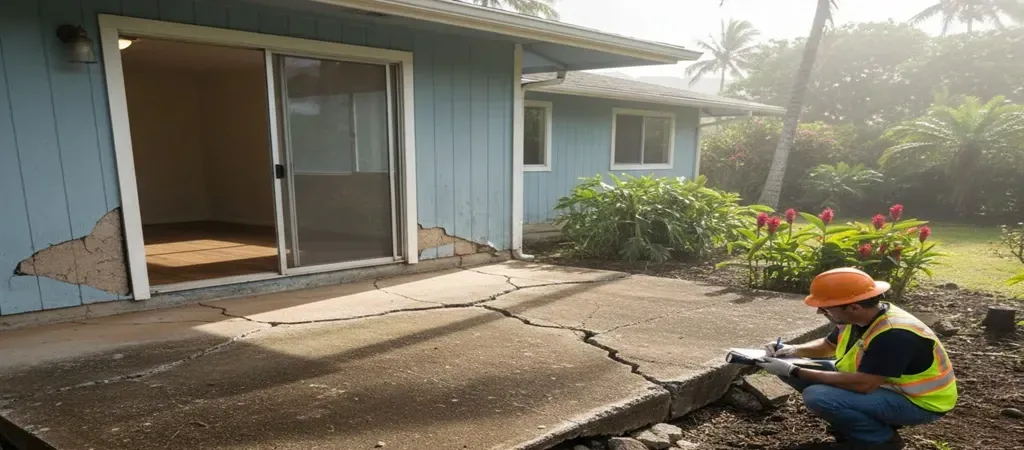
According to excavation services in Oahu, a proper site assessment helps determine excavation depth, slope requirements, and whether additional stabilization will be needed. Excavation that ignores subsurface conditions often results in uneven settlement or shifting over time.
Drainage Is Not Optional in a Tropical Climate
Heavy rainfall, high humidity, and rapid runoff place constant pressure on excavated areas.
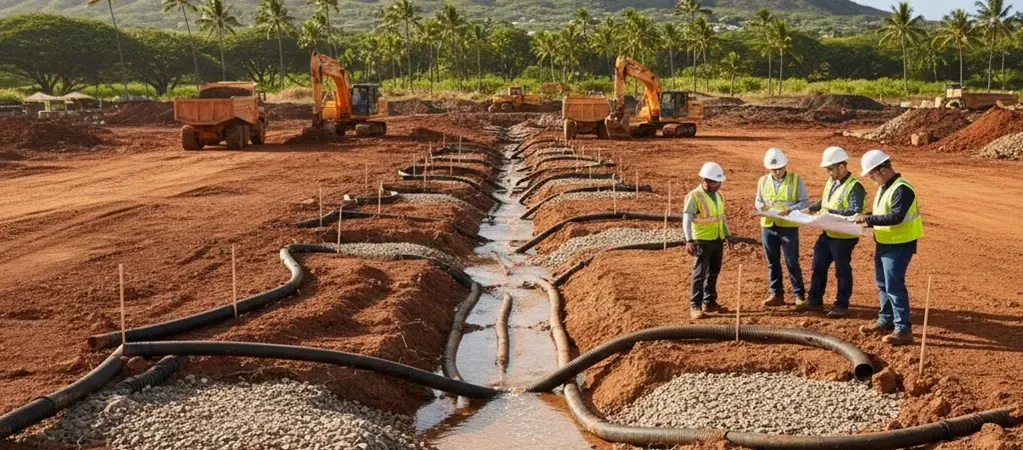
Poor drainage leads to erosion, undermining, and soil movement. Uncontrolled runoff can wash away support beneath foundations or retaining walls. Even flat sites require careful planning to ensure water flows away from structures rather than pooling beneath them.
Drainage solutions should be integrated into excavation planning, not treated as an afterthought. Proper grading, swales, and subsurface drainage systems help protect the long-term integrity of the site.
Permits and Local Regulations Matter More Than Expected
Excavation in Hawaii often requires permits, especially when grading, retaining walls, or changes to natural slopes are involved. Excavation services in Oahu understand these regulations and permitting processes. Coastal zones, conservation districts, and hillside properties are subject to additional oversight.
Skipping permit requirements can halt a project mid-construction or lead to expensive corrections later. Regulations exist to prevent erosion, protect neighboring properties, and preserve natural landscapes.
Understanding local requirements before excavation begins prevents delays and ensures the project complies with safety and environmental standards.
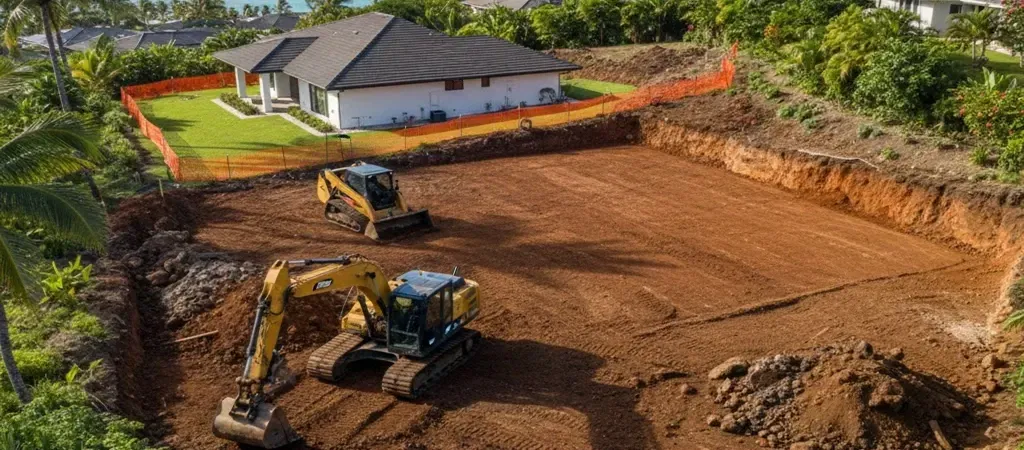
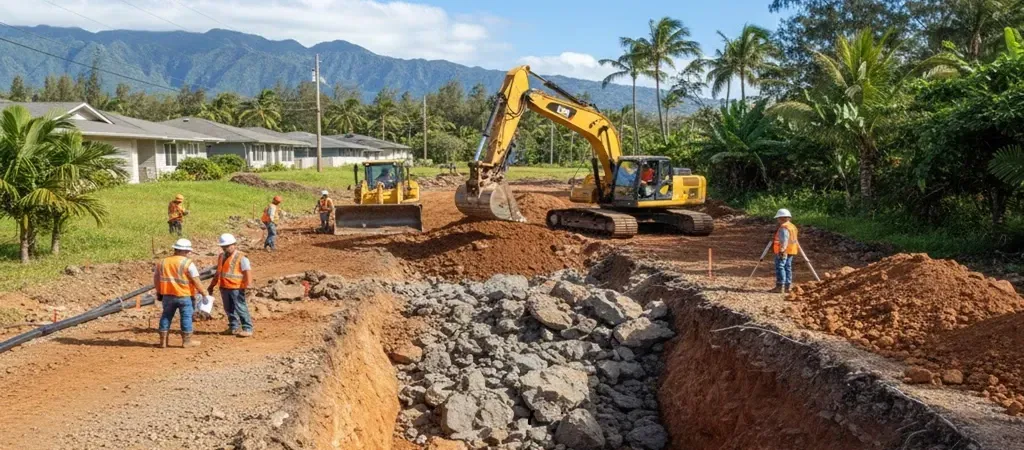
Excavation projects in Oahu must account for property boundaries, required setbacks, and hidden utilities to avoid costly mistakes.
Slope Stability and Retaining Requirements
Many properties in Hawaii are built on or near slopes. Excavation on sloped terrain introduces risks that flat land does not.
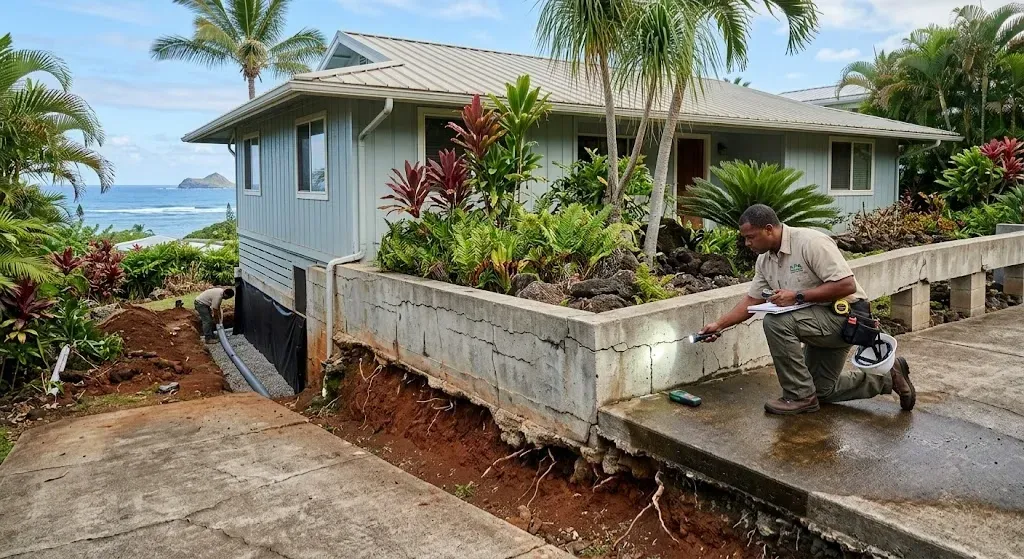
Cutting into a slope without proper support can destabilize surrounding soil. Retaining systems may be required to prevent collapse or erosion. These systems must be engineered to handle both soil pressure and water movement.
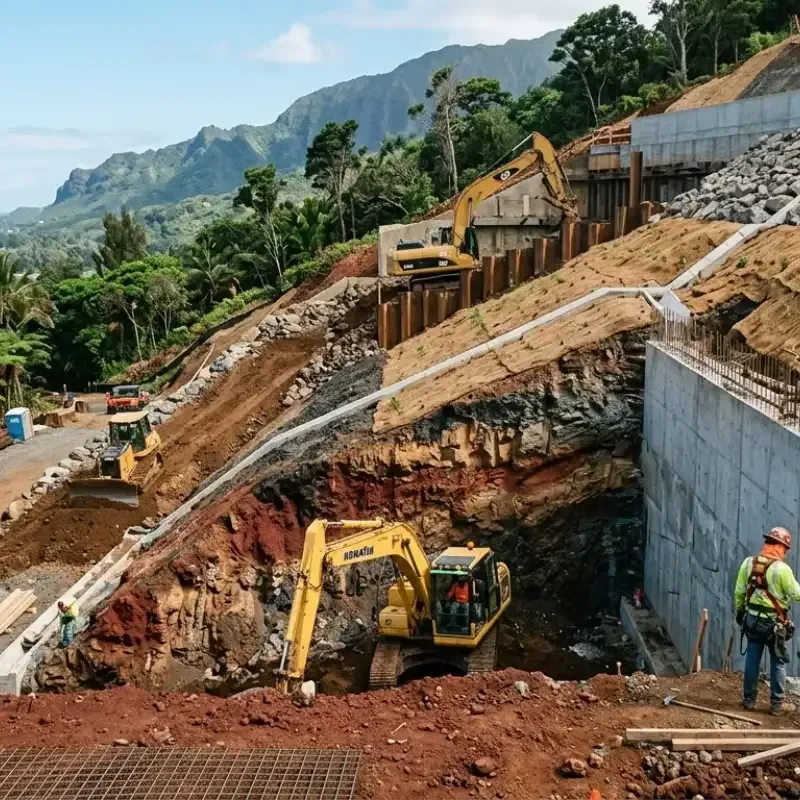
According to our excavation team, improperly planned excavation on slopes often leads to cracking, movement, or failure over time. Stability planning should always be part of the initial excavation design.
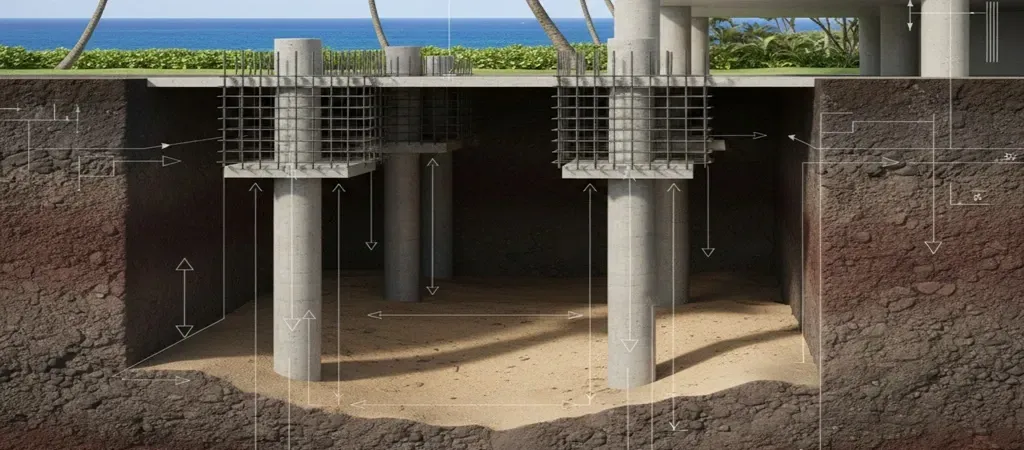
Different soil types respond to excavation and load pressures in very different ways, directly affecting safety and stability.
Equipment Selection and Access Constraints
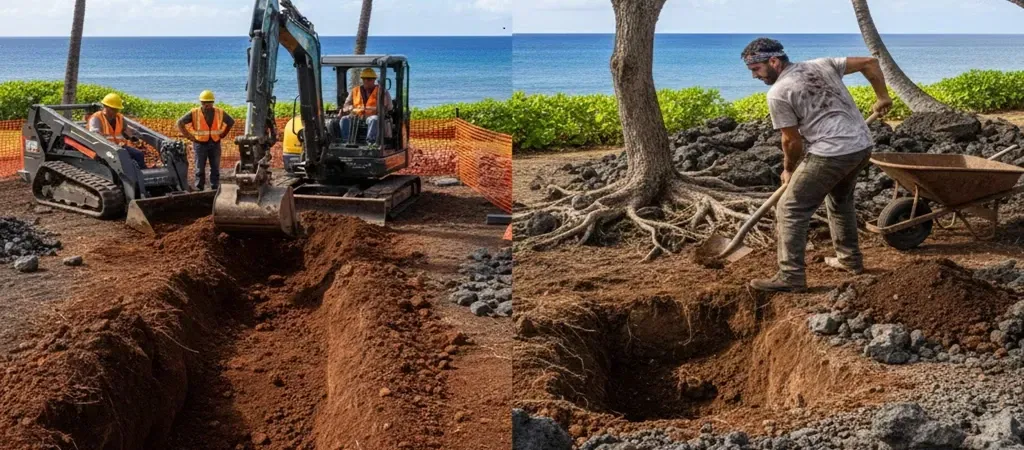
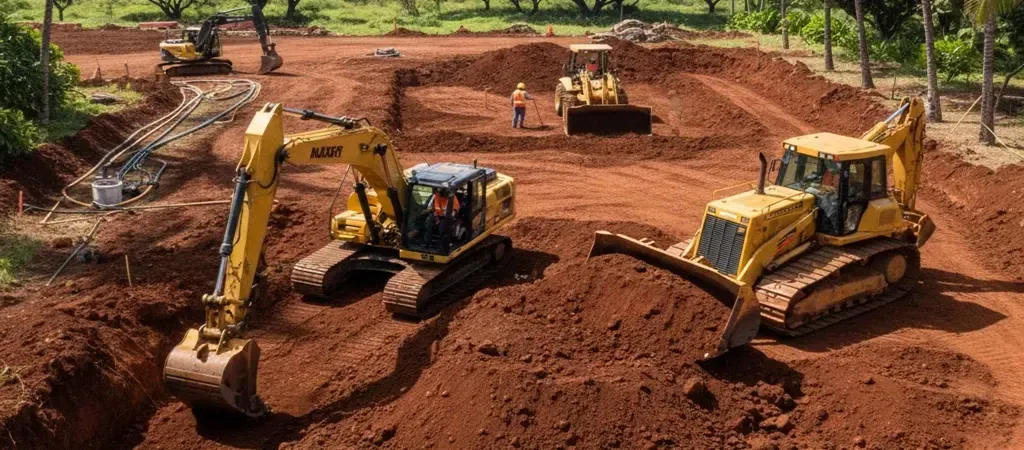
Excavation equipment must match the site conditions. Narrow access, steep grades, and limited staging areas are common challenges across the islands.
Using equipment that is too large can damage surrounding areas. Equipment that is too small may struggle with dense soils or rock. Choosing the right tools for the site improves efficiency and reduces risk.
Access planning is just as important. Excavation projects often require temporary access paths, especially on residential properties where space is limited.
Utility Location and Infrastructure Awareness
Before excavation begins, all underground utilities must be identified. Hawaii’s older neighborhoods may have undocumented lines or outdated infrastructure.
Striking a utility line causes delays, safety hazards, and repair costs. Utility location services should always be used, even for small excavation projects.
Awareness of nearby infrastructure also helps prevent undermining adjacent structures or shared systems.
Learn the property line, setback, and utility rules you must know before excavating in Oahu to keep your project compliant on track.
Environmental Impact and Erosion Control
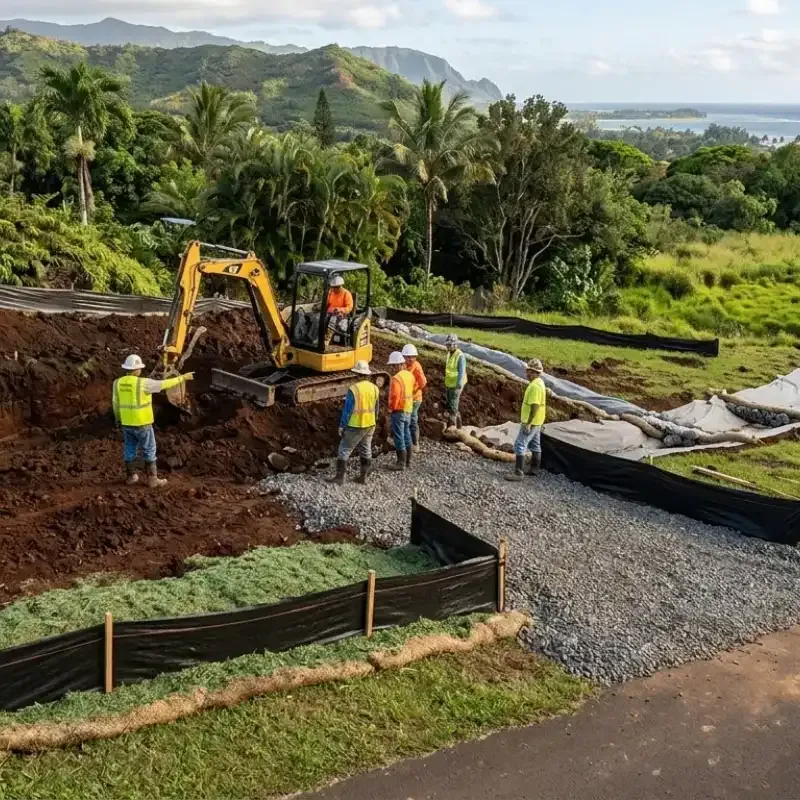
Hawaii places strong emphasis on protecting land and surrounding ecosystems. Excavation that causes erosion or sediment runoff can damage nearby properties and waterways.
Erosion control measures such as silt fencing, stabilized access points, and controlled runoff paths are often required. These measures protect both the project site and the surrounding environment.
Responsible excavation balances construction needs with environmental stewardship. Ignoring erosion control creates problems that extend beyond the jobsite.
Oahu’s volcanic soil presents unique challenges that influence excavation methods and long-term stability. Learn how Oahu’s volcanic soil affects residential excavation projects to better prepare for safe and reliable construction.
Planning for What Comes After Excavation
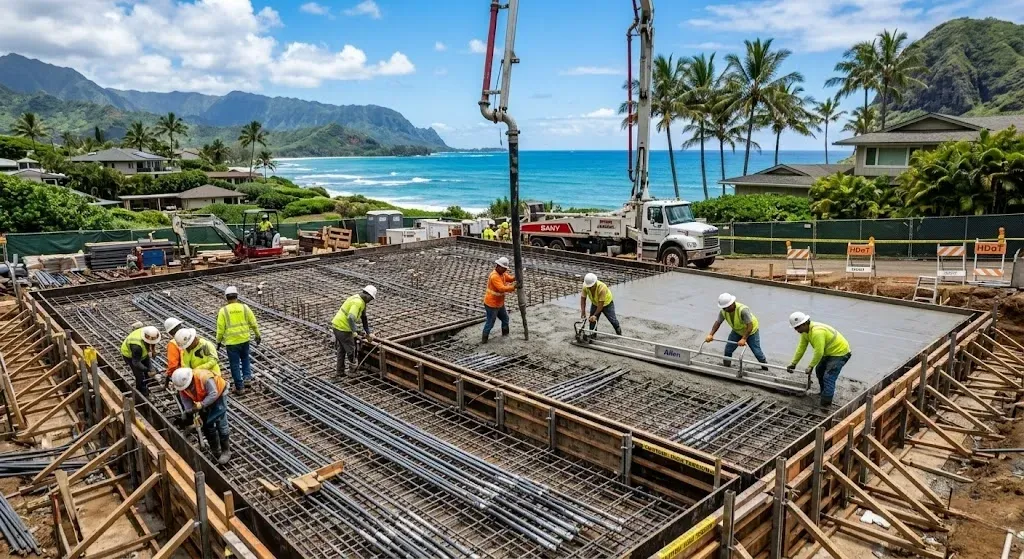
Excavation is only the first phase of construction. Planning must consider what follows, whether that is fencing, masonry, foundations, or hardscape installation.
Excavation depth, compaction, and alignment must support the next stage of work. Poor preparation makes later construction more difficult and less reliable.
A well-executed excavation creates a stable platform for everything that comes next. A rushed excavation creates hidden problems that surface years later.
Why Careful Excavation Pays Off in Hawaii
Excavation mistakes are expensive to fix, especially after construction is complete. In Hawaii’s demanding environment, shortcuts rarely stay hidden.
Projects that succeed over the long term begin with excavation that respects soil behavior, water movement, and terrain challenges. Planning, assessment, and proper execution reduce risk and improve durability.
Starting an excavation project in Hawaii requires more than machinery and manpower. It requires understanding the land itself. When excavation is done with that understanding, structures stand stronger, last longer, and perform better in island conditions.
Applying that level of understanding takes experience and local expertise. Reach out to professionals to plan and execute your excavation project with confidence and long-term performance in mind.