How Oahu’s Volcanic Soil Affects Residential Excavation Projects
Core Insight: Oahu’s volcanic soil creates unpredictable excavation conditions, requiring specialized equipment, site-specific planning, and careful foundation design to avoid structural issues and costly delays. Understanding soil density, drainage behavior, and subsurface variability is essential to ensure long-term stability, accurate budgeting, and successful residential construction on the island.
Homeowners often underestimate how much soil conditions influence construction timelines, costs, and long-term structural stability. On Oahu, ignoring the realities of volcanic terrain leads to cracked foundations, drainage failures, and costly corrections. Understanding how volcanic soil behaves is essential for any residential excavation project on the island. It determines what is possible, what is risky, and what must be engineered differently compared to mainland construction.

What Makes Oahu’s Soil Volcanic
Oahu’s soil originates from basaltic lava flows that cooled and fractured over thousands of years. As these volcanic rocks broke down, they formed layers of clay-rich soil mixed with dense rock, coral fragments, and compacted ash.
According to professional excavation services in Oahu, this composition creates soil that is extremely strong in some areas and unexpectedly fragile in others.
Hard rock shelves can sit inches below the surface, while softer, weathered material may appear stable but collapse when disturbed. This unpredictability is one of the defining challenges of excavation on Oahu.
Soil Density And Excavation Resistance
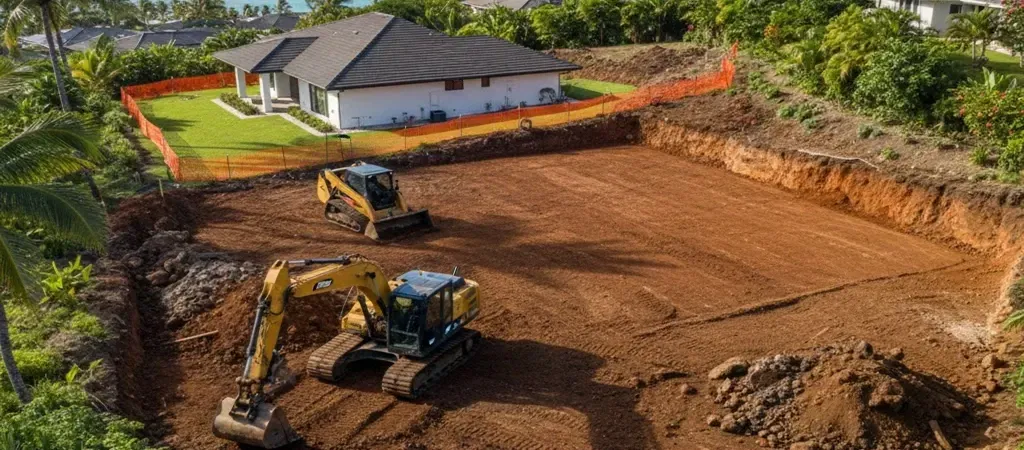
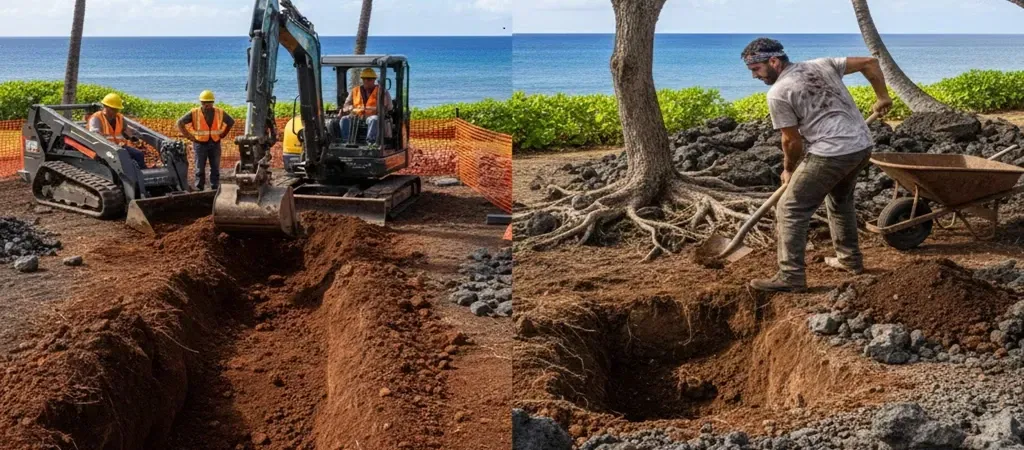
Volcanic soil on Oahu is known for its high density. Unlike sandy or loamy soils found elsewhere, basalt-based ground resists digging and requires specialized equipment. Our Oahu excavation experts say that excavation often involves rock breakers, hydraulic hammers, or controlled cutting rather than standard trenching.
This resistance directly affects project timelines. Digging foundations, footings, or utility trenches often takes longer than expected, especially in older neighborhoods where lava rock is closer to the surface. Attempting to rush excavation in these conditions increases the risk of uneven cuts and structural instability.
Before breaking ground, understanding property lines, setbacks, and utility regulations is essential to avoid costly mistakes. Learn about the property line, setback, and utility rules you must know before excavating in Oahu and ensure your project stays compliant from start to finish.
Uneven Subsurface Conditions
One of the most significant excavation challenges on Oahu is inconsistency beneath the surface. Two adjacent properties can have entirely different soil profiles. One lot may contain solid basalt just below grade, while the neighboring lot sits on fractured rock mixed with clay.
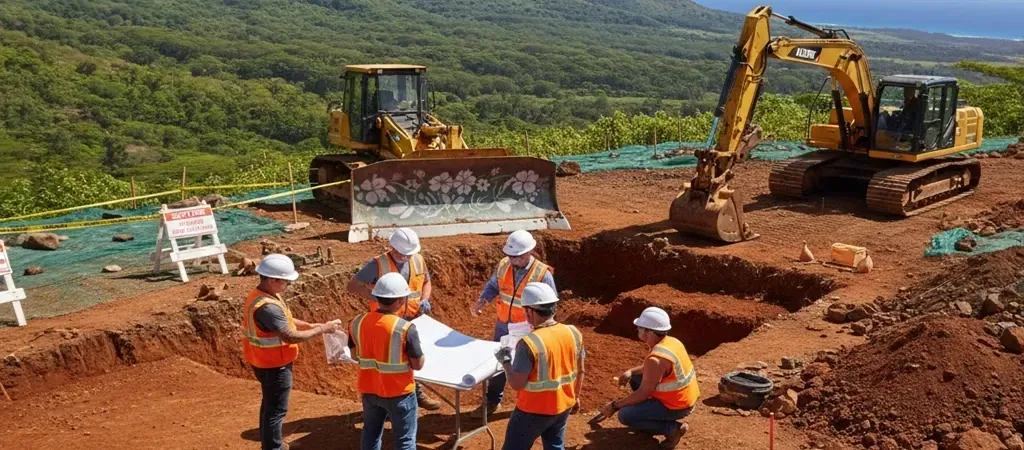
This unevenness makes standardized excavation plans unreliable. Residential projects require site-specific evaluation, including test digs or soil sampling, before excavation begins. Assuming uniform soil conditions across a property is a common and costly mistake.
Commercial projects demand careful planning to handle complex excavation challenges and ensure long-term stability. Learn about excavation for commercial projects: key considerations and challenges to prepare your project for success.
Drainage Behavior
In Volcanic Soil
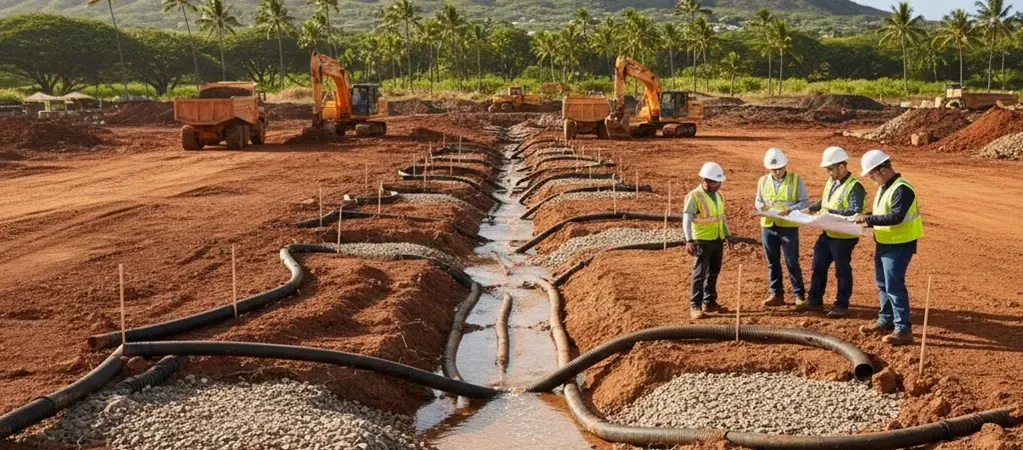
Volcanic soil affects drainage in complex ways. In some areas, fractured basalt allows water to move quickly through the ground. In others, clay-heavy layers trap moisture, leading to pooling and saturation.
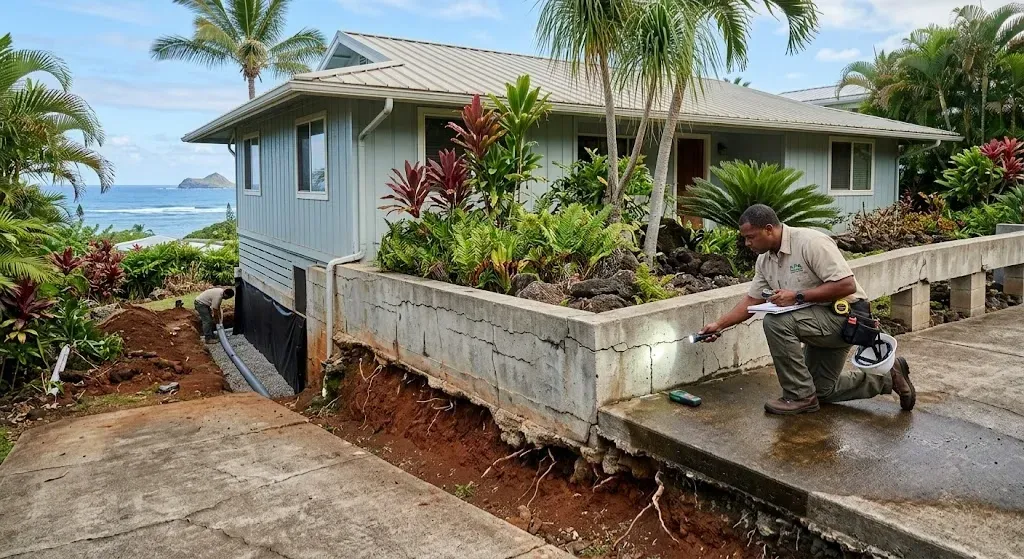
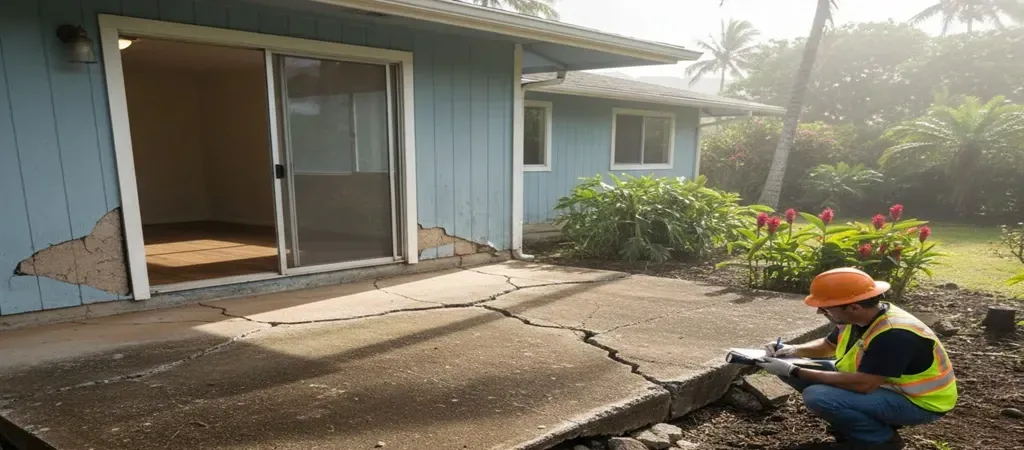
Poor drainage planning during excavation often results in foundation settlement or hydrostatic pressure against retaining walls. On Oahu, proper grading and sub-base preparation are not optional. Excavation must account for how water moves both on the surface and underground during heavy rain.

Impact On Foundation Design
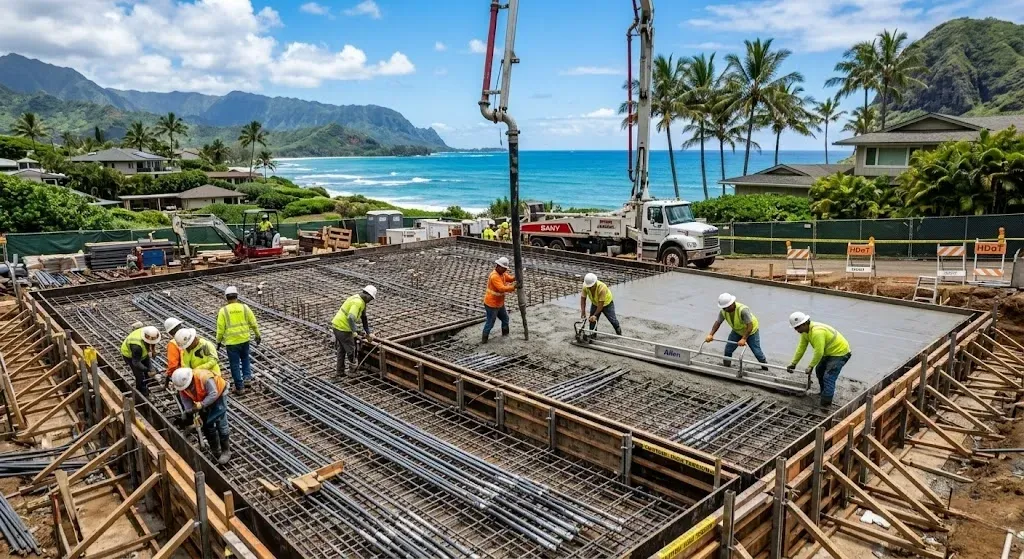
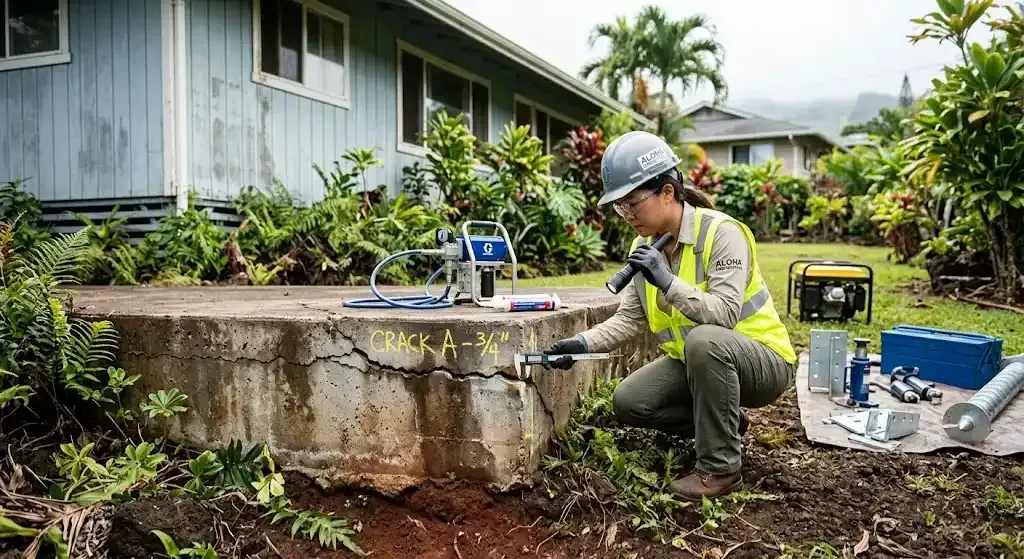
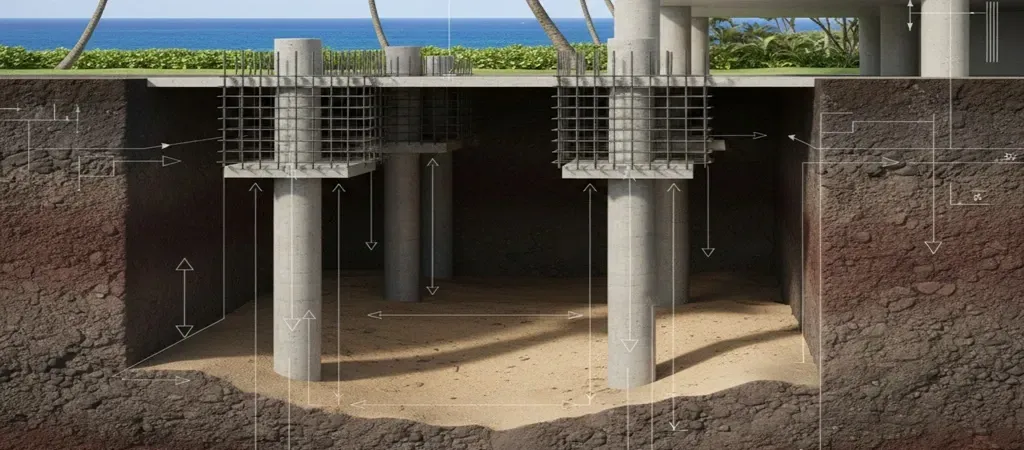
Residential foundations on Oahu must respond to volcanic soil conditions rather than fight them. Shallow foundations may be appropriate where solid rock is close to the surface, but they require precise leveling and anchoring.
In areas with mixed soil layers, deeper footings or stepped foundations are often necessary. Excavation depth is determined not just by building size but by soil stability. Cutting corners during excavation compromises the entire structure above.
Retaining Walls And Slope Stability
Oahu’s terrain includes slopes, ridges, and elevated lots where excavation directly affects soil stability. Volcanic soil can appear solid until it is disturbed. Once cut, it may fracture along natural fault lines or erode rapidly during rain.
Retaining walls in these areas must be built with a clear understanding of soil pressure and drainage. Excavation behind retaining structures requires careful staging to prevent collapse. Poor excavation practices on slopes are a leading cause of wall failure on the island.

Equipment Selection Matters
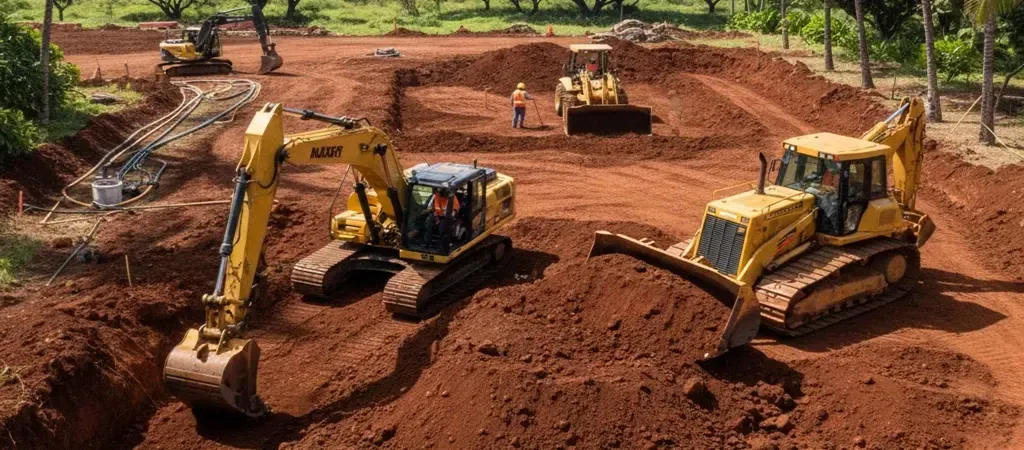
Volcanic soil demands the right tools. Lightweight excavation equipment often lacks the power to break through basalt layers, while oversized machinery can damage surrounding soil and nearby structures.
Proper excavation balances force and control. Precision matters more than speed. Residential projects benefit from equipment suited for tight access and controlled cutting, especially in established neighborhoods where utilities and existing foundations are nearby.
Cost Implications Of Volcanic Terrain
Excavation costs on Oahu are closely tied to soil conditions. Volcanic rock increases labor time, equipment wear, and disposal costs. Rock removal and haul-off are significant budget considerations that should be accounted for early in project planning.
Unexpected rock encounters are a common cause of budget overruns. Accurate site evaluation before excavation begins is the most effective way to control costs and avoid mid-project changes.
Environmental And Regulatory Considerations
Excavation on Oahu is subject to environmental regulations designed to protect surrounding land and water systems. Volcanic soil disturbance can increase runoff and sediment flow if not managed properly.
Residential excavation must follow grading, erosion control, and disposal guidelines. These requirements are not bureaucratic obstacles. They exist because volcanic soil, once disturbed, behaves differently than other soil types and can cause long-term environmental damage if mishandled.
Planning For Long-Term Stability
The ultimate goal of residential excavation on Oahu is long-term stability. Volcanic soil rewards careful planning and punishes shortcuts. Projects that respect soil conditions experience fewer structural issues, better drainage performance, and longer-lasting foundations.
Excavation is not simply a preliminary step. It sets the tone for the entire build. When volcanic soil is properly understood and addressed, it becomes a reliable base rather than an obstacle.

The success of your construction depends on skilled excavation that navigates Hawaii’s unique conditions. Learn how to pick reliable excavation services in Hawaii for safe and efficient results.
Final Thoughts
Oahu’s volcanic soil defines how residential excavation must be approached. It requires patience, technical understanding, and site-specific planning. Treating it like ordinary soil leads to structural problems that surface years later.
Handling Oahu’s volcanic soil correctly requires experience and specialized knowledge. Reach out to professionals to ensure your excavation is done safely and your project stands the test of time.