Common Foundation Problems in Oahu Homes and How to Prevent Them
Local Insight: Common foundation problems in Oahu homes usually stem from soil movement, poor drainage, moisture intrusion, and uneven settling driven by island-specific terrain and climate. Preventing these issues requires early attention to runoff control, slope behavior, vegetation placement, and small warning signs before structural damage escalates.
Most foundation problems start quietly with hairline cracks, minor settling, drainage issues, or moisture intrusion that homeowners ignore until repairs become much more expensive. This is exactly why
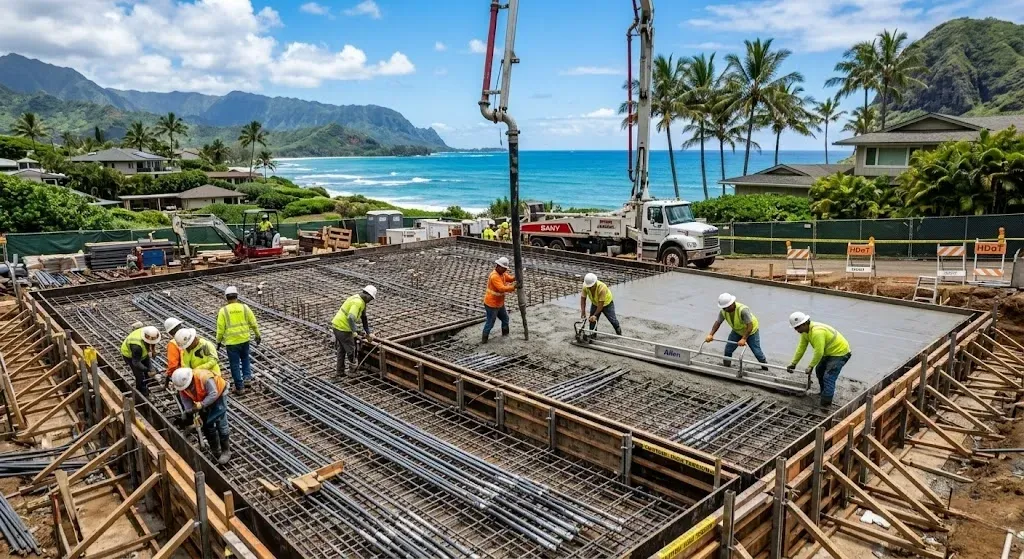
concrete foundation services in Oahu must begin with understanding island-specific conditions, because local soil movement, humidity, rainfall, and coastal exposure place very different demands on homes than mainland environments.
Why Oahu Homes Face Unique Foundation Risks
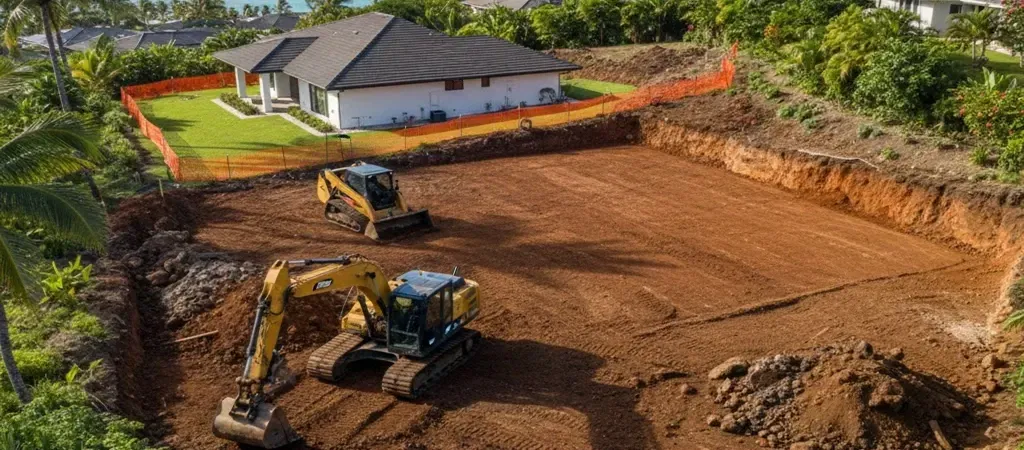
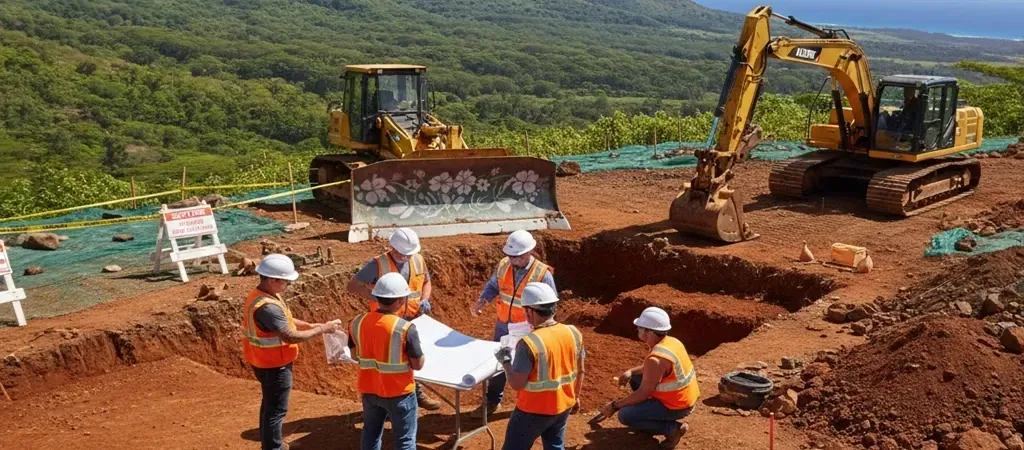
Oahu’s environment creates a combination of stress factors that make foundation issues more common than many homeowners expect. In our work across hillside neighborhoods, coastal lots, and older residential communities, we’ve seen how volcanic soil layers, coral-based fill, clay pockets, and poor drainage interact beneath homes.
Some areas sit on highly compacted ground, while others contain fill material that shifts over time. Add heavy seasonal rain, salt-rich air, and slope instability, and even well-built homes can begin showing movement.
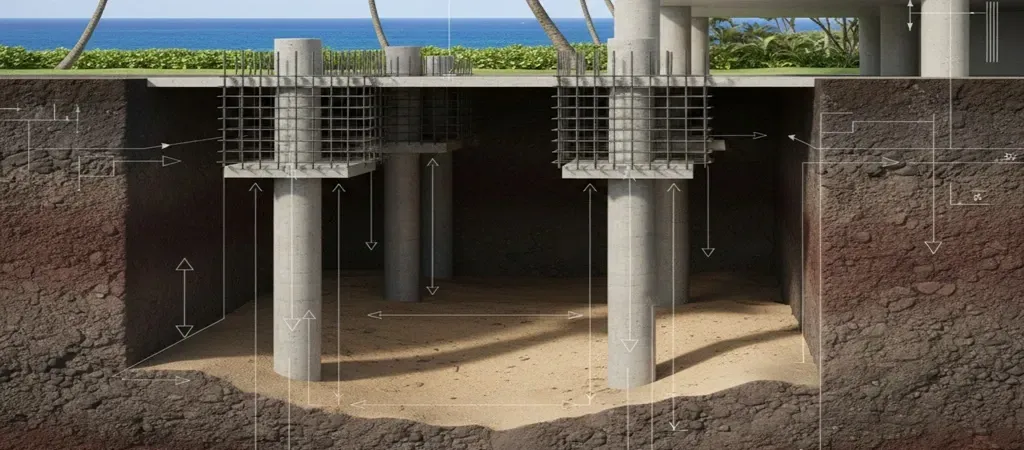
These issues arise because foundation performance in Oahu is rarely determined by concrete strength alone. The soil beneath the slab or footing is often the real cause. Homes in Mānoa, Kāneʻohe, Hawaiʻi Kai, and other moisture-prone areas tend to experience different movement patterns than homes built on flatter, drier parcels.
The Most Common Foundation Problems We See
Settlement Cracks and Uneven Floors
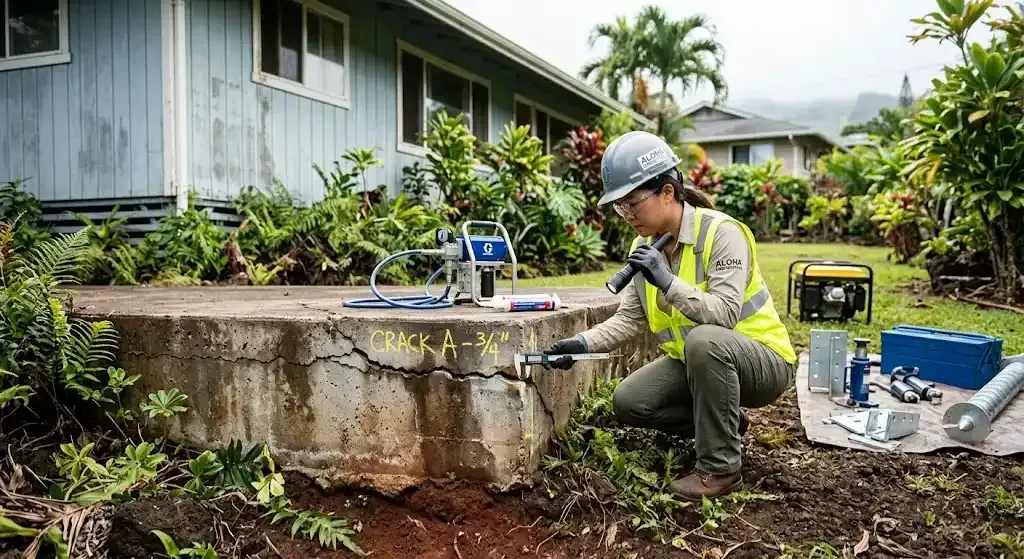
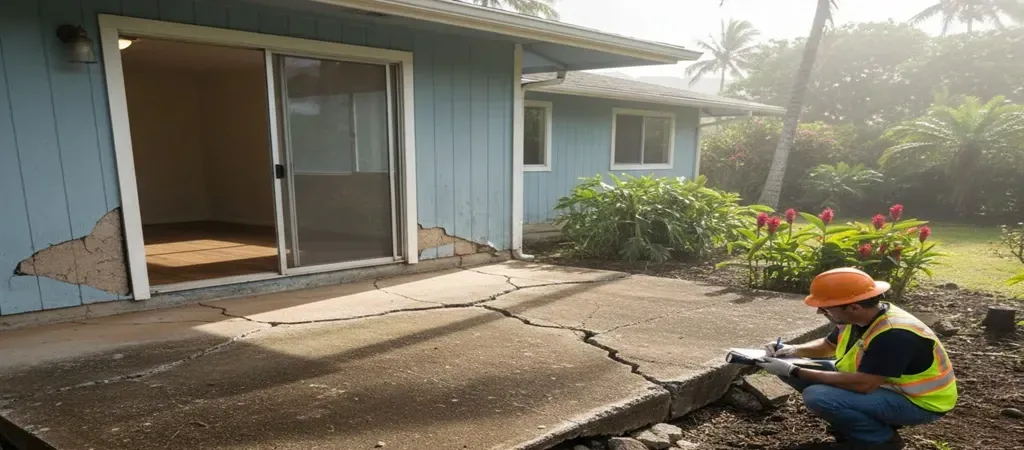
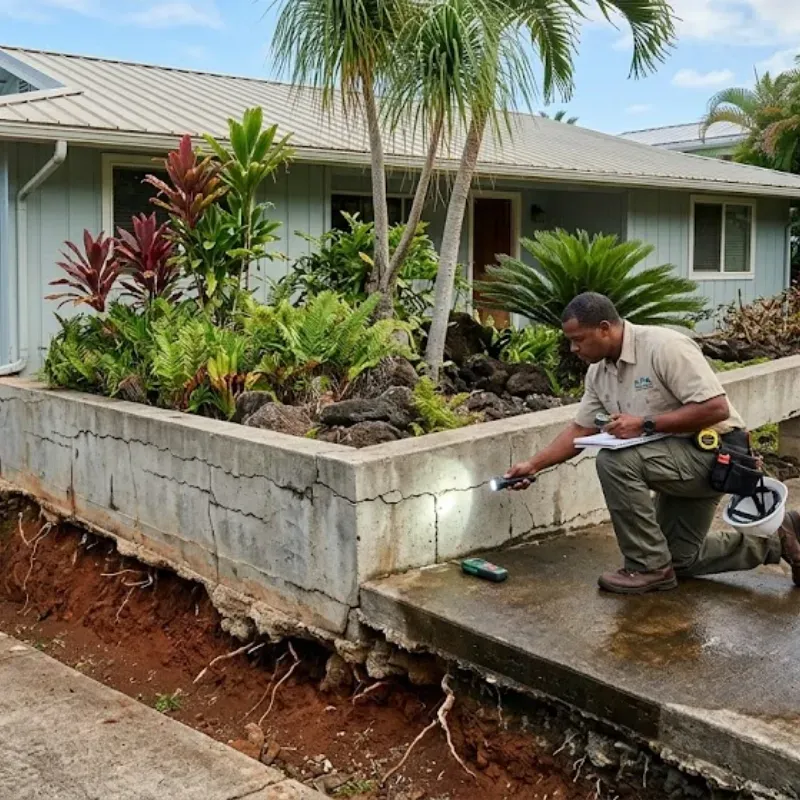
One of the most common warning signs is cracking along interior walls, door frames, flooring, or exterior masonry. These cracks often happen when soil under one portion of the home compresses faster than another.
Our concrete foundation team often finds that the real cause is poor compaction, aging fill soil, or long-term water saturation below the slab edge. On sloped Oahu properties, downhill movement can make this issue worse.
The mistake many homeowners make is treating the crack cosmetically. Repainting or patching drywall does nothing if the slab continues to move.
A smarter decision is to monitor whether cracks widen over time, especially after heavy rain periods. Review signs you need a foundation inspection to identify and prevent further damage.
Water Intrusion and Perimeter Erosion
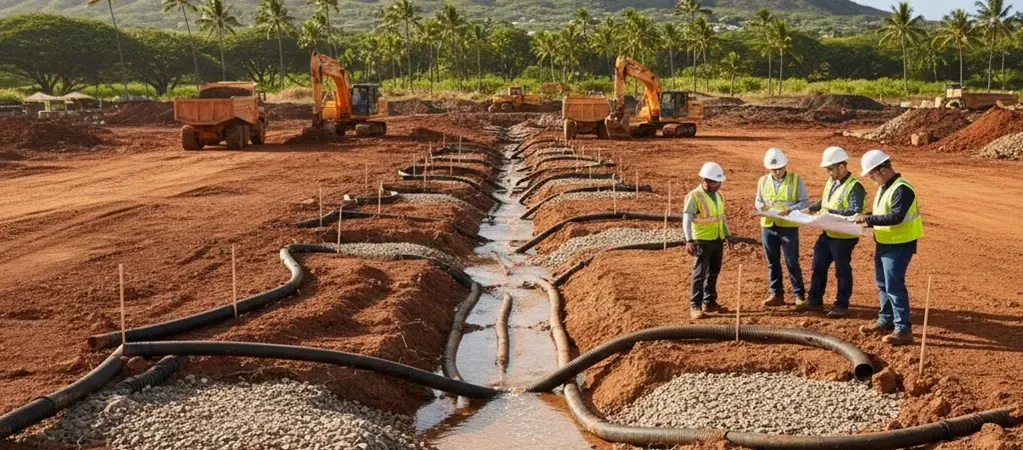
Poor drainage is one of the most overlooked causes of foundation damage in Hawaiʻi. When water repeatedly collects near the perimeter, it softens surrounding soil and slowly removes support from the footing.
We’ve seen this happen on homes with short downspout extensions, negative grading, or walkways that unintentionally direct water toward the structure.
The tradeoff here is important. Many homeowners focus only on visible drainage upgrades like gutters, but the grading around the home often matters more than the drainage hardware itself.
Preventing erosion means:
- Extending runoff away from the home
- Regrading low spots
- Maintaining swales and drainage channels
- Avoiding planter beds that trap water against walls
These steps are especially critical in rainy windward communities.
How Local Soil Conditions Change the Right Solution
What works for a dry inland lot in Central Oahu may fail completely on a humid, slope-heavy property in East Oahu. That is why one-size-fits-all foundation advice is often misleading.
Based on experience, homes built on volcanic rock-adjacent lots may experience less settling but can develop cracking from rigid stress transfer. Meanwhile, homes on mixed fill soil may face slow, progressive movement.
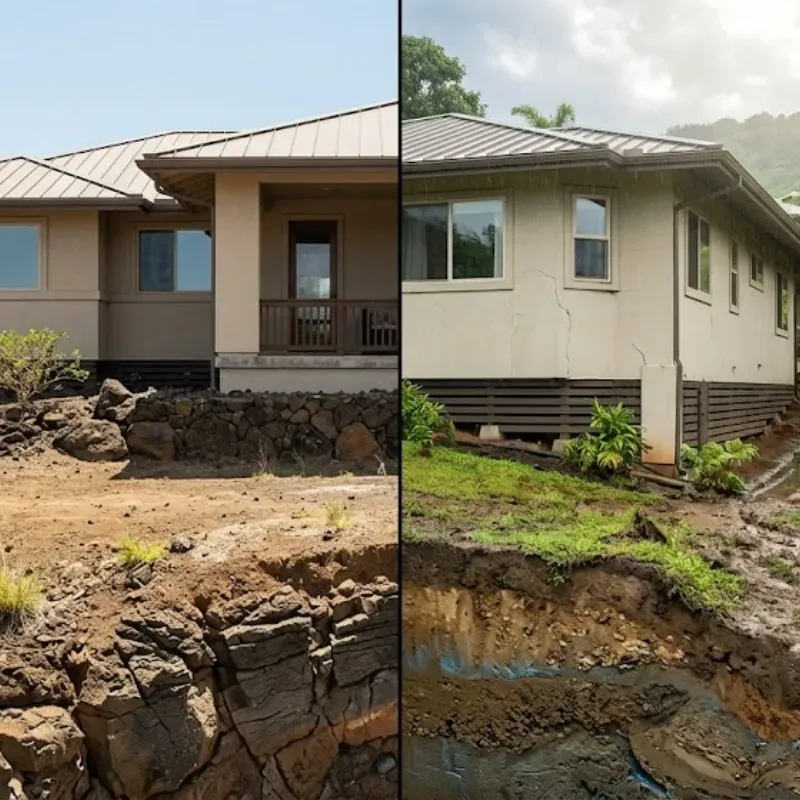
This location-specific difference is why prevention should always begin with site context:
- Is the lot sloped?
- Does rainwater naturally move toward the home?
- Was the parcel previously graded or filled?
- Is the home near older retaining walls?
- Does the area hold moisture after storms?
The answer to these questions changes the right prevention strategy.
Prevention Strategies That Actually Work in Oahu
The most effective prevention methods are usually simple, but they require consistency.
First, control water. Poor drainage remains the biggest long-term threat to most residential foundations on Oahu.
Second, inspect retaining walls, fences, and nearby hardscape. Structural movement often first appears in surrounding masonry before interior cracks become visible.
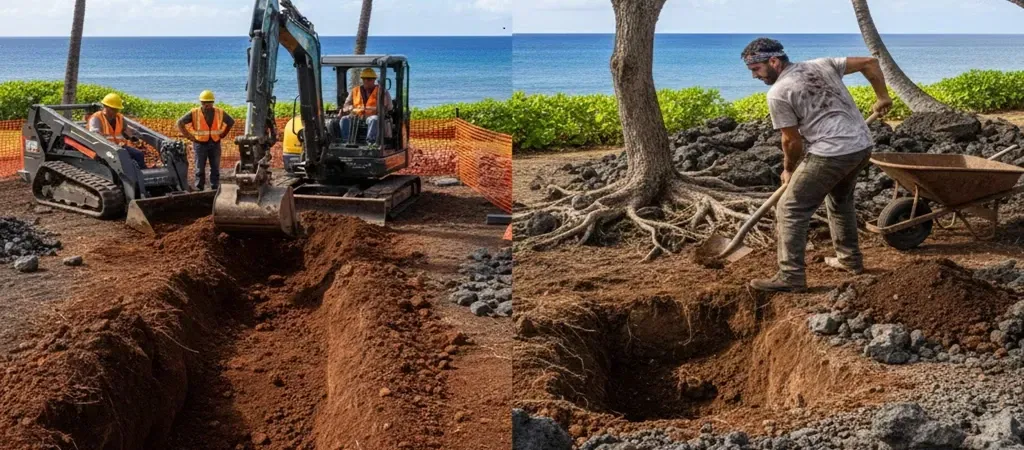
Third, watch vegetation placement. Large root systems planted too close to the house can gradually influence moisture distribution in surrounding soil.
Fourth, address small warning signs early. In our work, the homes that require major structural correction usually showed minor symptoms years earlier.
The practical takeaway is that prevention costs far less than structural correction. Review long-lasting concrete results in Oahu to help maintain your concrete investment.
Common Homeowner Mistakes That Make Foundation Problems Worse
The most common mistakes include:
- Ignoring recurring hairline cracks
- Letting roof runoff discharge near the slab
- Installing hardscape without drainage planning
- Overwatering landscape beds near the home
- Assuming all cracks are cosmetic
- Delaying inspections after heavy storms
These mistakes become expensive in Oahu because tropical moisture accelerates soil change. What looks minor during dry weeks can worsen quickly during prolonged rainfall.
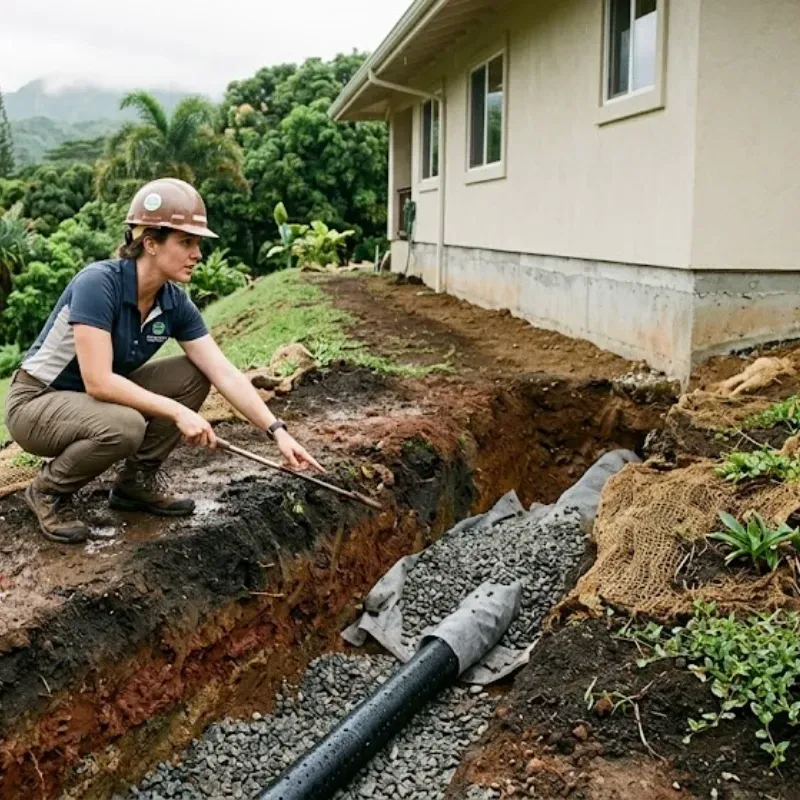
Prevent the Soil Problem Before It Becomes a Concrete Problem
The most reliable way to protect a home’s foundation in Oahu is to focus on drainage, slope behavior, and soil stability before visible structural damage appears. Foundation problems here are rarely random. They usually reflect how island moisture, terrain, and previous site work interact over time.
Homeowners who understand these local conditions make better long-term decisions, avoid cosmetic-only fixes, and gain confidence in knowing which warning signs deserve immediate attention. That confidence is what keeps small foundation concerns from becoming major structural repairs later.